
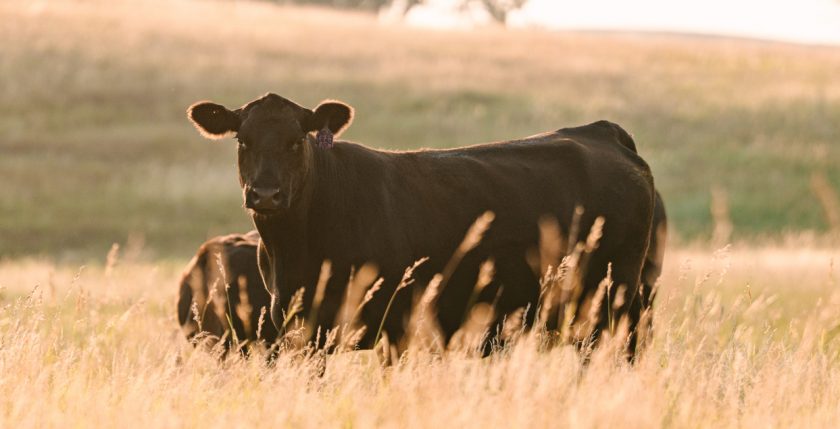
Fall is a good time to evaluate your cow herd’s body condition score (BCS) and make management adjustments heading into winter. Body condition can play a key role in reproductive success. Having cows at the right BCS at the right time can help set you up for a successful breeding season.
Understanding body condition scores
First, you need to understand the numerical scores associated with BCS. Scores are on a 1-to-9 scale and can increase or decrease in half-point increments. For this article, we will focus on scores of 5, 5.5 and 6.

Cody Korthaus
GENEX Territory Sales Manager
[email protected]
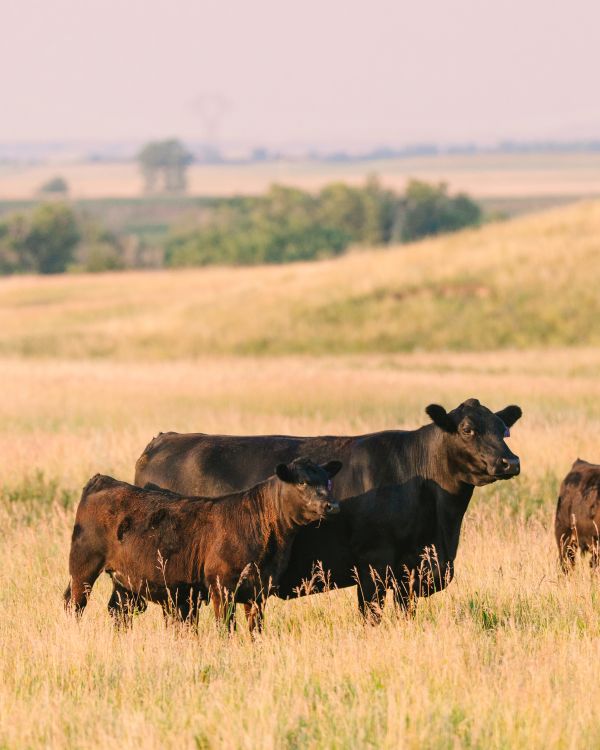
BCS 6 can be defined as having no ribs showing with normal gut fill. Cattle will have a smooth appearance overall, and some fat deposition will be evident in the brisket. Cattle put on fat from front to back and top to bottom. As a result, a cow with a BCS 6 will show fat deposition in her brisket and front end, but not excessive fat towards her rear quarters or a square appearance over her topline. Maintaining cows in production above BCS 6 generally does not provide an economic return.
At BCS 5.5, cattle will still have some evidence of fat deposition across their frame, but the 13th rib will be visible.
BCS 5 is where the 12th and 13th ribs become visible. Fat deposition will appear depleted around the hip bones and tailhead, although the backbone will not yet be visible.
Why does BCS 5 matter? Once a cow falls below BCS 5, she has depleted her fat reserves and may begin using muscle tissue to meet her energy requirements. That muscle can be extremely costly to rebuild nutritionally.
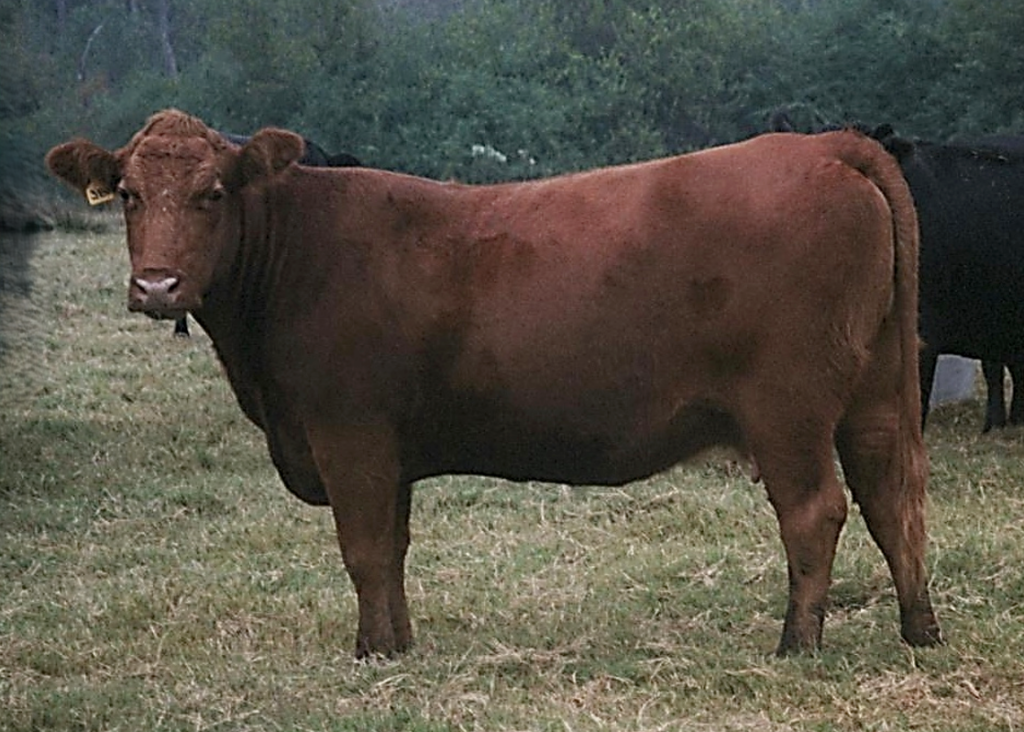
BCS 6
No ribs showing, smooth overall appearance and some fat deposition in the brisket.
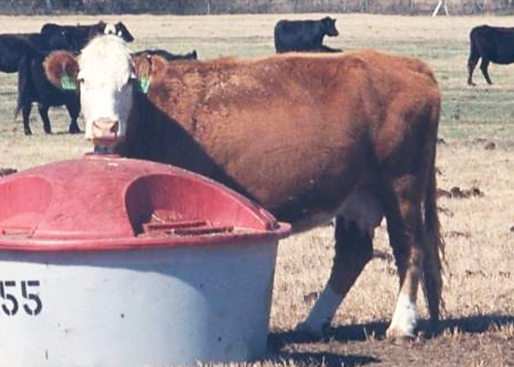
BCS 5.5
One rib visible with normal gut fill and some fat deposition across the frame.
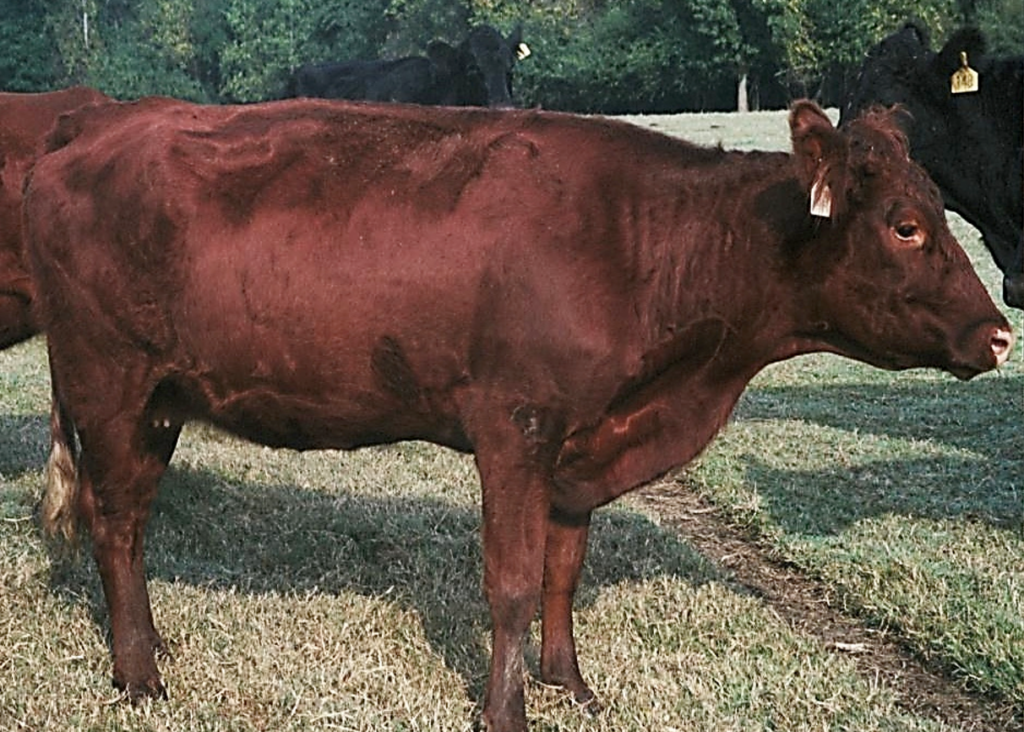
BCS 5
The 12th and 13th ribs become visible, with depleted fat around the hip bones and tailhead.
Not every cow in a group will be in the same body condition. When evaluating your herd, evaluate about 85% of the cows in the group, rather than allowing a few outliers to define the group.
Now that you understand baseline definitions for the different scores, let’s look at the timing of body condition scoring and why that is important.
Body condition at calving
At calving, BCS 6 is generally the ideal target. A productive set of females at BCS 6 that are adapted to their environment, supported by adequate weather, moisture and nutrition, should be well-positioned for the next stage of production.
This is where reproductive success really comes into play. Numerous studies and trials have tracked the postpartum interval and a cow’s return to estrus based on BCS at calving. In general:
- Cows at BCS 6 at calving may return to estrus at approximately 50 days postpartum.
- Cows at BCS 5 at calving may return to estrus at approximately 60 days postpartum
- Cows at BCS 4 at calving may return to estrus at approximately 70 days postpartum.
So, why does body condition at calving matter? With a 283-day gestation, a cow needs to rebreed by 82 days postpartum to maintain a 365-day calving interval.
Conception rates during the first estrous cycle postpartum are generally low, at less than 40%. At this point, the reproductive tract is still recovering from calving. Conception rates increase on the second cycle and beyond.
A cow that returns to estrus at 50 to 60 days postpartum has a better opportunity to reach a second estrous cycle by the 82-day target. Starting the production cycle at an appropriate BCS can therefore give her more opportunities to conceive within the desired breeding window.
Body condition at breeding
Looking further into the production stages, the general goal is a BCS of 5.5 to 6 at breeding. Maintaining body condition from calving through breeding is ideal, although it is not always possible. At minimum, ensuring your herd’s BCS does not fall below 5.5 by breeding can help support conception rates.
Research shows that cows maintaining their body condition can have 5% to 10% higher conception rates than cows in adequate but declining body condition. That difference may reach 30% when compared with cows at BCS 5 that continue to lose condition.
Evaluating both the cow’s current BCS and the direction in which it is moving provides a more complete picture. A cow at an adequate score but continuing to lose condition may face more reproductive challenges than a cow maintaining that same score.
Using BCS to make weaning decisions
As you move through the production cycle, weaning is another opportunity to use BCS as a management tool. Rather than strictly relying on a calendar date, weaning based on a cow’s BCS can be financially beneficial especially during drought years.
Ideally, cows should not fall below BCS 5. Below that level, they have no external fat reserves available to meet their energy requirements. The cow will then begin using muscle tissue for energy, which can become extremely costly from a nutritional standpoint. She must then rebuild muscle tissue before restoring fat cover and returning to the desired BCS for the next calving season.
Don’t forget about the bulls
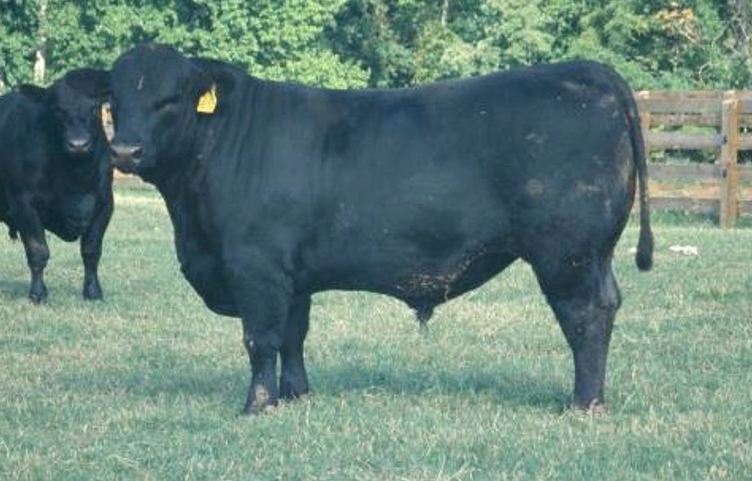
Body condition management is not limited to your cow herd. Following the A.I. season, aim to turn bulls out at a BCS 6. During turnout, herd bulls should prioritize breeding activity over eating.
Bulls will spend considerable time traveling and following cows in estrus. A bull will generally lose 10% to 15% of his body weight while covering cows. That can equate to 1 to 1.5 BCS points.
Because animals below BCS 5 have depleted their external fat reserves, bulls can face the same costly process of rebuilding muscle before restoring fat cover.
Setting your herd up for reproductive success
Frequently evaluating your herd’s BCS throughout the year and maintaining the appropriate BCS at calving can help set cows up for success throughout the production cycle. Proper body condition management can ultimately have a significant impact on reproductive performance and the success of your breeding season.
Questions? Talk with your GENEX representative about body condition scoring and how you can use BCS to help set your herd up for reproductive success in the upcoming breeding season.